
Garage Cabinets: Which Materials Hold Up Best in California
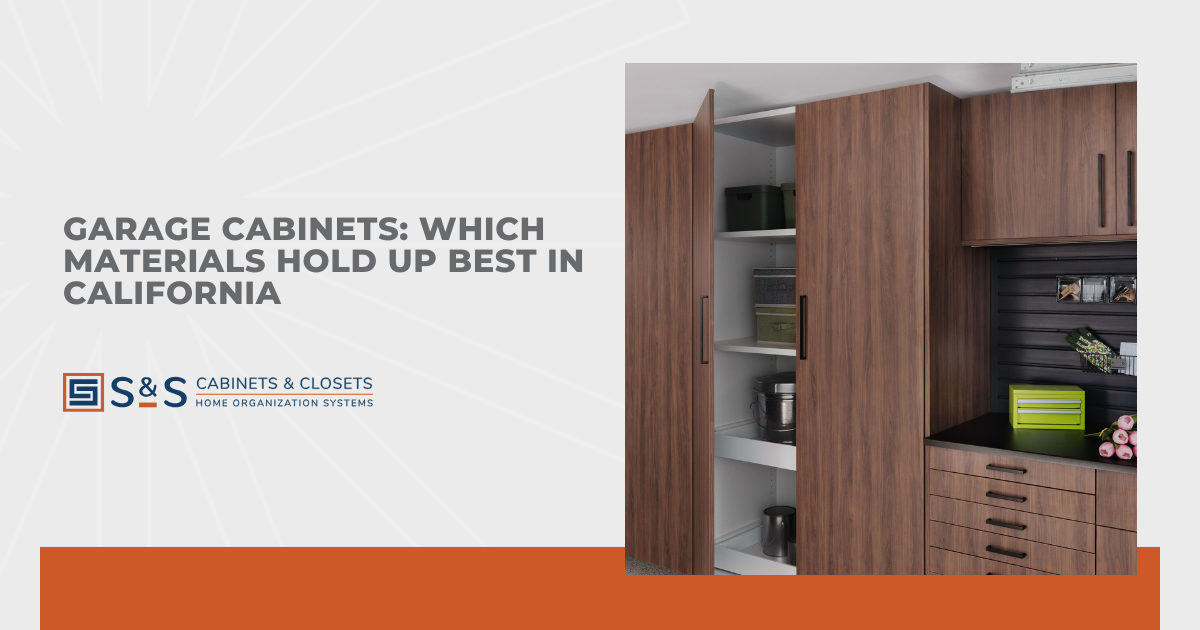
When you’re comparing garage cabinets, the material matters more than it may seem at first. Heat, dry air, moisture, dust, and daily wear can all affect how well your cabinets hold up. If you want storage that stays functional and looks good for years, it helps to understand how each material performs in real garage conditions.
In California, those conditions can vary quite a bit depending on where you live and how you use your garage. I’ve found that cabinet choices tend to make more sense once you look past color and layout and focus on durability first. Before you settle on a style, it’s worth getting clear on which materials tend to hold up well and which ones may call for more caution.
Here are the main garage cabinet materials worth comparing:
- Powder-coated steel
- Stainless steel
- Plywood
- MDF
- Particleboard
- PVC or resin
- Solid wood
Each one comes with its own strengths, limitations, and maintenance needs. Keep reading and I’ll walk you through which materials tend to hold up best and where each one makes the most sense.
Powder-Coated Steel
Powder-coated steel is a popular choice for garage cabinets when durability is a top priority. It holds up well under heat, dust, frequent use, and the kind of wear a busy garage often sees. In hotter inland areas, that stability can be especially useful because steel won’t swell or soften the way some wood-based materials can. I often see this material make the most sense when heavier-duty storage is part of the plan.
The powder-coated finish adds useful protection to the surface. It helps resist scratches, moisture, and general wear while giving the cabinets a clean, finished appearance. Powder-coated steel cabinets also tend to handle heavier loads well, which can be helpful if you’re storing tools, supplies, or larger items. For many garages, that combination of strength and low maintenance is a major advantage.
There are still a few tradeoffs to keep in mind. A hard impact can leave dents, and deeper scratches may expose the metal underneath the coating. Cost can also run higher than some engineered wood options, depending on the cabinet system. Even with those factors in mind, I’d still consider powder-coated steel one of the stronger choices when long-term durability matters most.
Stainless Steel
Stainless steel is a strong option if moisture resistance is high on your list for garage cabinets. It performs especially well in garages exposed to damp air, where corrosion resistance can make a meaningful difference. Near the coast, that can be a major advantage because salt air is harder on many materials. It also gives cabinets a sleek, polished look that can feel more elevated.
This material works well when you want storage that can handle regular use without much fuss. The surface is non-porous, so it’s easier to wipe down after dust, spills, or everyday grime. Stainless steel also resists warping, pests, and many of the issues that affect wood-based materials. In the right garage, those qualities can make it a practical long-term option.
The main drawback is cost, since stainless steel usually sits at the premium end of the price range. Fingerprints and smudges can also show more easily, which may matter if you prefer a finish that always looks tidy. Some spaces may find the industrial appearance a little too stark. For garages where moisture resistance and durability matter most, stainless steel can be a very solid choice.
Plywood
Plywood is often one of the strongest wood-based options for garage cabinets. Its layered construction gives it better structural stability than lower-cost engineered wood products. It also holds screws and hardware more securely, which matters when cabinets need to support heavier items. If you want a more custom built-in look, plywood is often a solid material to consider.
This material also gives you more flexibility in design and finish. When plywood is paired with a thermally fused laminate surface, it can offer a clean, durable finish that’s easier to maintain in day-to-day garage use. A setup like this can work well in a garage that deals with dry heat, dust, and occasional moisture. Appearance and durability can both benefit when the core material and surface finish are well matched.
The main caution with plywood is that quality can vary depending on the grade, construction, and edge treatment. Even with a durable surface, exposed edges or poorly sealed areas can still be more vulnerable to moisture. Cost can also run higher than some other engineered wood options. For many garages, though, plywood with a durable laminate finish offers a strong balance of strength, appearance, and everyday practicality.
MDF
MDF, or medium-density fiberboard, is often used for garage cabinets when a smooth, consistent finish is a priority. Its uniform surface works especially well with thermally fused laminate, which helps create a clean look without the grain patterns you get with natural wood. This combination can make MDF feel more polished than many people expect in a garage setting. It’s also a common option when appearance and easy upkeep both matter.
In a garage, the surface finish and edge treatment matter just as much as the core material. A thermally fused laminate surface can help protect MDF against routine wear, stains, and regular cleanup. This type of cabinet tends to make more sense in garages with moderate storage needs and fairly controlled exposure to moisture. If you’re considering MDF, it helps to look at the full cabinet construction rather than the core material alone.
Moisture is still the main limitation to keep in mind. If water reaches exposed edges, seams, or damaged areas, MDF can swell and lose its shape more easily than plywood or metal. Garages exposed to persistent dampness or heavier environmental stress may be harder on it. For the right setup, MDF with a durable laminate finish can still be a practical option that balances appearance, function, and cost.
Particleboard
Particleboard with thermally fused laminate (TFL) is a practical option for garage cabinets when you want a clean finished look, easy maintenance, and solid everyday functionality. The TFL surface helps resist routine scuffs, stains, and wear while giving the cabinets a smooth, consistent appearance. It also makes cleanup easier, which can be especially useful in a garage where dust and everyday messes tend to build up. If you want a polished cabinet system without moving into a higher price range, this material combination can offer a lot of value.
Construction still matters just as much as the core material. When particleboard is paired with a durable TFL surface and quality edge treatment, it can perform well for many common garage storage needs. Household supplies, seasonal items, cleaning products, and other everyday contents are often a good fit for this type of cabinet. In many garages, that balance of appearance, function, and cost is a big part of the appeal.
Moisture exposure is still something to watch, especially around damaged edges or compromised areas. Particleboard is not the same as steel or plywood in terms of structural strength, so it makes sense to match it to the way the cabinets will actually be used. Even so, a well-made particleboard cabinet with TFL can be a durable and attractive choice for garages that need reliable day-to-day storage.
PVC or Resin
PVC or resin is a practical option for garage cabinets when moisture resistance is a top concern. These materials won’t rust, and they don’t absorb water the way wood-based products can. Garages exposed to damp air, coastal moisture, or frequent messes can be a good match for this category. Easy cleanup is another reason they appeal to many garage setups.
Another advantage is low maintenance. PVC and resin cabinets are usually easy to wipe down, and they hold up well against everyday grime, spills, and dusty conditions. They’re also lighter in weight than steel or solid wood, which can make installation and repositioning a little easier. In the right garage, the mix of convenience and water resistance can be very appealing.
The main tradeoff is strength. Some PVC or resin cabinets don’t feel as rigid as powder-coated steel or plywood, especially when shelves are loaded with heavier items. Quality can also vary quite a bit depending on the cabinet system and hardware. I’d look at this material more for moisture-prone or lighter-duty storage than for maximum load capacity.
Solid Wood
Solid wood brings a warmer, more custom look to garage cabinets than many other materials. It can make the space feel more finished, especially if you want the garage to blend in more with the rest of the home. This material also offers natural strength and a surface that can often be repaired or refinished if it gets scratched. If appearance matters just as much as function, solid wood may be worth considering.
Performance depends a lot on the garage environment and the cabinet construction. Solid wood can hold up well, but it reacts more to changes in heat and humidity than steel or resin. In a garage with drier air, warmer temperatures, or seasonal shifts, expansion and contraction can become more noticeable. Good sealing and quality craftsmanship make a bigger difference with this material than they do with some others.
Cost is one of the main tradeoffs to keep in mind. Solid wood usually sits at the higher end of the price range, and it may need more upkeep to stay looking its best. It’s also not always the most practical choice for a garage focused mainly on utility. Solid wood is often a better fit when visual warmth matters alongside everyday function.
Which Garage Cabinet Materials Hold Up Best In California?
If you’re comparing garage cabinets for long-term durability, a few materials tend to stand out more consistently than others. When I look at how these materials perform in California garages, powder-coated steel is often one of the strongest all-around options because it handles heat, wear, and heavy use so well. Stainless steel is especially appealing in areas where damp air or coastal moisture may be more of a concern. Plywood also deserves a place near the top when it’s well built, properly sealed, and paired with a durable finish.
MDF and particleboard can still make sense when budget, appearance, and lighter-duty storage are bigger priorities, especially when the cabinet construction includes a durable laminate surface. PVC or resin can be a practical choice if moisture resistance matters more than maximum strength. Solid wood can be a beautiful option, though it often asks for more maintenance and a more controlled environment. A cabinet that fits your actual garage conditions will usually serve you better than one chosen on looks alone.
Conclusion
The material you choose for garage cabinets can save you a lot of frustration later. In a California garage, heat, moisture, dust, and daily wear can all shape how well your cabinets hold up. The most useful approach is to match the material to the way your garage actually functions and the conditions it faces. When those pieces line up, your storage is more likely to feel reliable, practical, and worth it.