
Why Does My Custom Closet Smell So Bad?
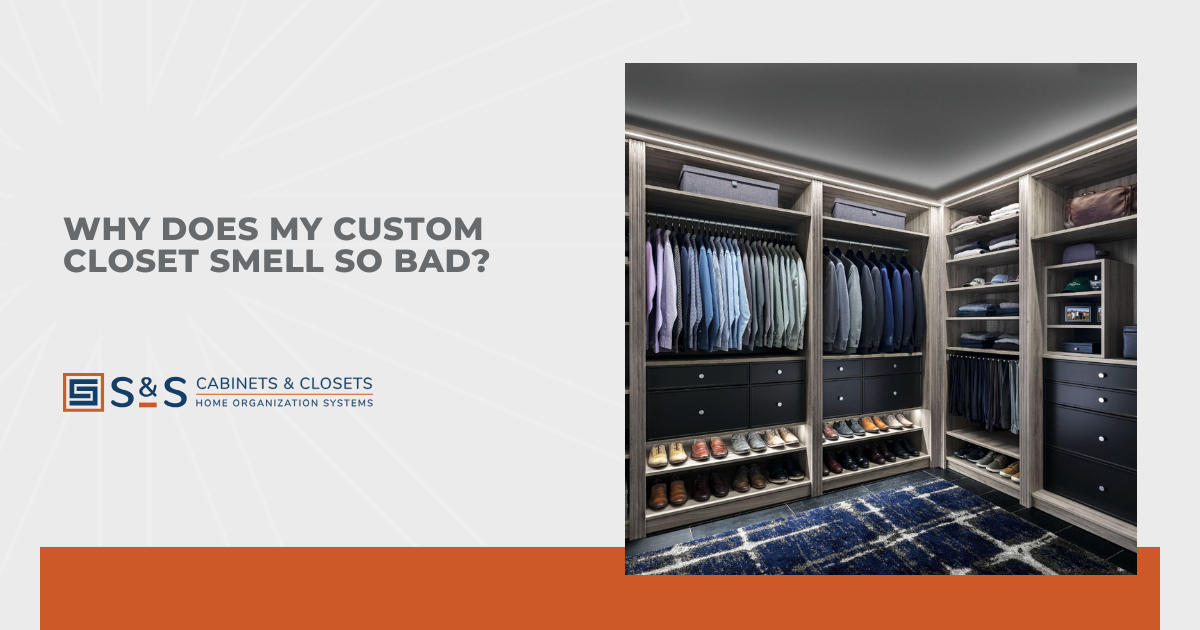
A custom closet is supposed to feel clean, organized, and calming, not like a space you want to close as quickly as possible. I’ve talked with many homeowners who are surprised when their custom closet has an unpleasant smell they can’t explain. When you invest in a space that’s designed just for you, odors are usually the last thing you expect. That disconnect is often what makes the issue so frustrating.
Odors in custom closets are rarely random and are usually tied to airflow, materials, moisture, or what you’re storing inside the space. Once you identify the underlying cause, the situation becomes much easier to understand. That clarity makes it possible to address the problem effectively instead of masking it.
Below are the most common reasons a custom closet develops unpleasant odors:
- Your custom closet is trapping humidity
- The materials used in your custom closet are off-gassing
- Poor air circulation is letting odors linger
- Clothing and shoes are transferring odors to the closet
- Shoe storage is concentrating odors in one area
- Mold or mildew is growing behind the closet system
- The closet was installed over an existing odor source
- The custom closet was not designed for your home’s environment
If one or more of these sound familiar, keep reading to better understand what may be happening in your space.
Your Custom Closet Is Trapping Humidity
One of the most common reasons a custom closet smells bad is trapped humidity. Closets are typically enclosed spaces, which makes it easy for moisture to build up over time. Even small amounts of humidity can lead to a musty smell that settles into shelving and walls. I see this most often in closets near bathrooms, laundry rooms, or basements.
When moisture has nowhere to go, it creates the perfect environment for odors to develop. Clothing and fabrics absorb that damp air, which makes the smell even more noticeable. Without proper ventilation, the problem tends to get worse instead of better. That’s why humidity control is such an important factor in closet design.
The Materials Used in Your Custom Closet Are Off-Gassing
Some custom closet materials naturally release odors after installation. This process, known as off-gassing, happens most often with engineered wood products, adhesives, and certain finishes. The smell is usually strongest when the closet is new, but it can linger longer than people expect. I’ve noticed it’s more common with lower-quality materials.
While off-gassing odors usually fade, poor airflow can cause them to stick around. In an enclosed custom closet, those smells don’t dissipate easily. That’s when homeowners start to worry something is wrong. In many cases, it’s simply a material issue combined with limited ventilation.
Poor Air Circulation Is Letting Odors Linger
Air circulation plays a big role in how a custom closet smells. When air isn’t moving, odors have a tendency to settle and stay put. Fully enclosed designs, solid backing panels, and tight layouts can unintentionally restrict airflow. Even a beautiful closet can struggle if air movement isn’t considered.
Stagnant air often makes small odor issues feel much bigger. Everyday smells from clothing or materials don’t have a chance to escape. Over time, the closet starts to smell stale. Improving airflow can make a noticeable difference faster than most people expect.
Clothing and Shoes Are Transferring Odors to the Closet
Sometimes the smell isn’t coming from the closet itself but from what’s stored inside it. Clothing that’s been worn, even briefly, can carry sweat, body oils, smoke, or outdoor odors. Once those items are placed into a closed custom closet, the smell spreads. Fabrics and finishes inside the closet can absorb those odors over time.
Because custom closets are more enclosed than traditional closets, smells tend to build up faster. What seems like a minor issue at first can affect the entire space. This is especially true if items are stored before they’ve fully dried or aired out. The closet ends up holding on to those smells long after the items are removed.
Shoe Storage Is Concentrating Odors in One Area
Shoes are one of the strongest sources of closet odors. They hold moisture and bacteria, which creates strong smells that don’t stay contained. In a custom closet, enclosed shoe drawers or towers can trap those odors in a small space. From there, the smell spreads to nearby shelving and clothing.
I’ve seen many cases where the entire closet smells bad, but the real issue is shoe storage. Without ventilation or odor control, shoe smells can dominate the space. That’s why shoe storage needs special attention in both design and daily use. Addressing this one area can dramatically improve how the closet smells.
Mold or Mildew Is Growing Behind the Closet System
A persistent musty smell can sometimes point to mold or mildew. This often happens when a custom closet is installed against an exterior wall or a wall with plumbing. Once the system is in place, airflow behind it becomes very limited. Moisture can get trapped without anyone realizing it.
Because it’s hidden, this type of odor can be hard to identify. Homeowners may clean the closet repeatedly without solving the problem. In my experience, these smells don’t go away on their own. They usually need to be addressed at the source to fully resolve the issue.
The Closet Was Installed Over an Existing Odor Source
In some situations, the smell was already present before the custom closet was installed. Old carpet, pet odors, or past water damage can get sealed behind new cabinetry. Once covered, those odors have nowhere to go. They slowly work their way out into the closet space.
This can be especially frustrating because it feels like the custom closet caused the problem. In reality, it may have simply trapped an existing issue. That’s why proper prep before installation is so important. Skipping that step can lead to long-term odor problems.
The Custom Closet Was Not Designed for Your Home’s Environment
Every home has unique conditions that affect how a custom closet performs. Climate, room location, and nearby moisture sources all matter. A design that works well in one space may struggle in another. When these factors aren’t considered, odors can develop over time.
Thoughtful design goes beyond storage and aesthetics. It’s about creating a space that functions well in its environment. When a custom closet is designed with airflow, materials, and location in mind, odor issues are far less likely. That planning makes all the difference long term.
Conclusion
A custom closet should feel like a space you enjoy opening every day. If it smells bad, it’s usually a sign that something needs attention, not that the closet itself was a bad idea. Most odor issues have a clear cause and a practical solution once you know where to look. With the right understanding and a little care, your custom closet can feel just as fresh as it looks.